
The eye care services remain critically neglected in the Uganda national health system because eye conditions are not seen as life-threatening like malaria or HIV
By Shakira Mutetsi Update| 23-Oct-2025
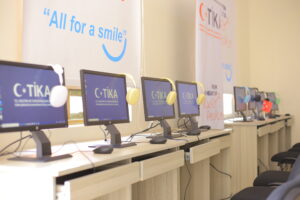
KAMPALA, Uganda (AA) Turkish state aid agency TIKA today donated a fully equipped computer lab for the blind to Uganda National Association for the Blind (UNAB). The lab equipped with assistive devices including software for visually impaired individuals intends to bridge the digital divide for the visually impaired persons within the community.
Turkish ambassador to Uganda Fatih Ak said that digital literacy stimulates participation in the modern job market and enhances employability.
“We value our partnership with the Ugandan government, its institutions and people, and we remain committed to building a future of shared growth and opportunity.” The ambassador said.
“A computer lab like this designed with assistive devices is more than a learning space, it becomes a catalyst for financial empowerment and long-term self-sufficiency,” he said.
“Digital literacy is essential for economic growth because it improves labor productivity, drives innovation, and provides broader market access.
According to sightsavers, an international charity organization working to prevent avoidable blindness, the eye sector remains critically neglected in the Uganda national health system, because eye conditions are not seen as life-threatening like malaria or HIV. Most government hospitals lack necessary equipment and trained staff to provide effective eye care services.
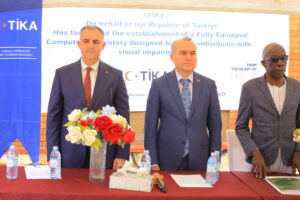
TIKA country coordinator Murat Cetin said that digital literacy is a foundation for a knowledge-based economy.
“For visually impaired individuals, access to technology is no longer a luxury, but a necessity. A computer lab equipped with screen readers, braille displays, and accessible software opens the doors to digital literacy. It empowers them to navigate the online world, access information independently and develop skills that are essential in today’s knowledge-based economy,” he said.
“Mastering digital tools opens doors to meaningful employment for visually impaired individuals. When we provide access to ICT training, we are not just teaching technical skills, we are unlocking pathways to diverse professions from administrative support and coding to launching their own businesses,” he added


UNAB executive Director Denis Tumwebaze thanked the Turkish government for committing to improving social inclusion for persons with disabilities.
Uganda has an estimated population of 45.9 million, with approximately 28,843 blind people, 329,489 people with low vision, and 6,314 people who are both blind and deaf.
According to health ministry, the most common causes of blindness include cataracts, uncorrected refractive errors, and other conditions like diabetic retinopathy, glaucoma, and trauma.

Source: AA