Ending the war in Sudan requires sincere partners and ending foreign interference, ambassador Ahmed Ibrahim
Update: Sept. 16-2025
By Aisha Nabukeera,
KAMPALA, Uganda (PAMOJA) Sudan has asked the African Union (AU) to reinstate its full membership status to the continental bloc and end diplomatic suspension from the organs.
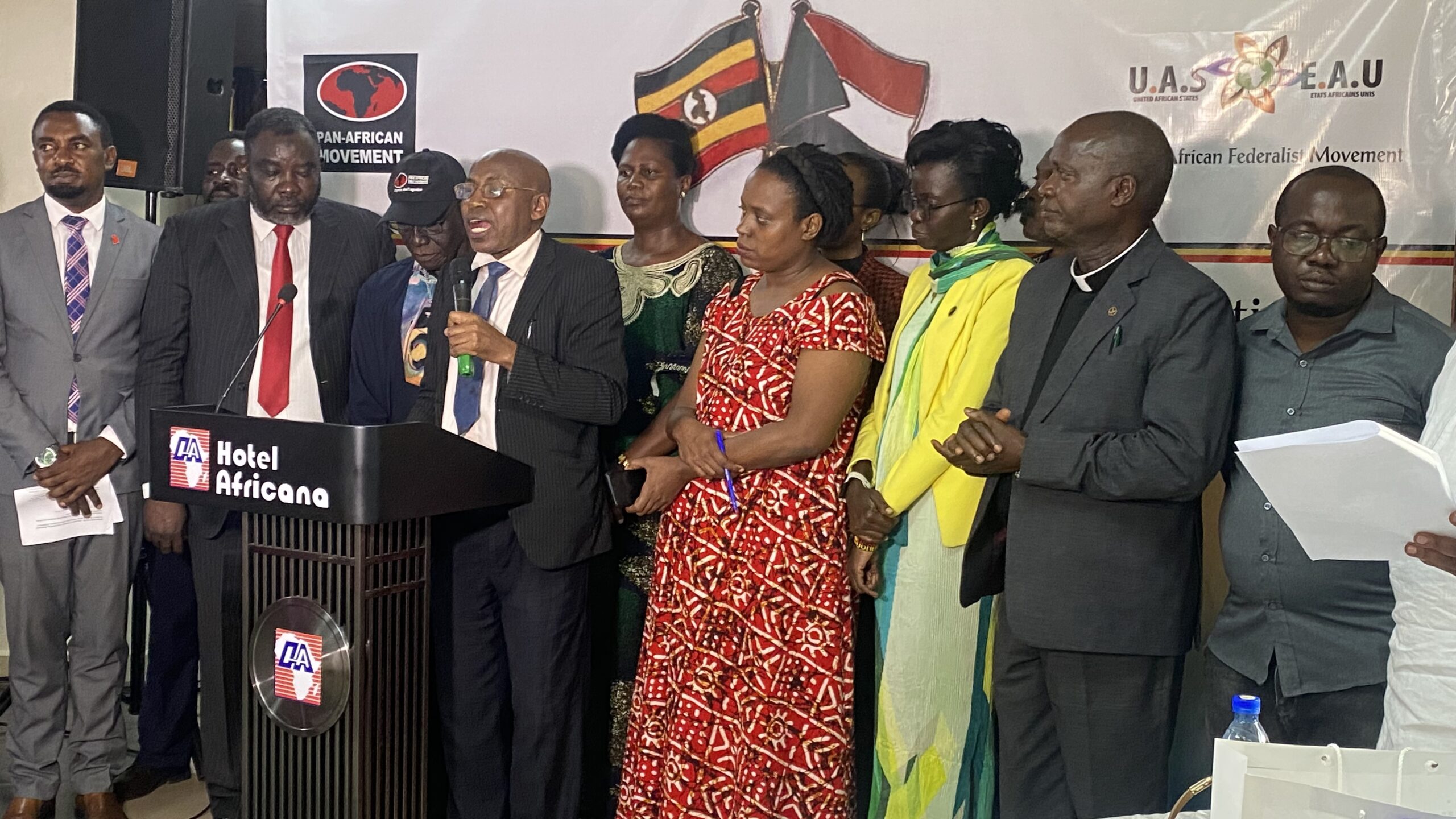
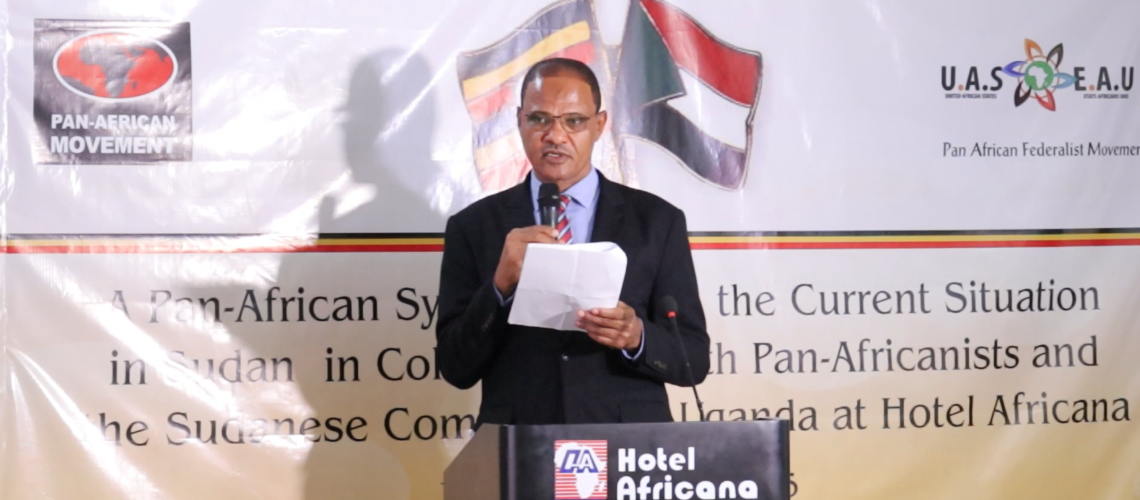
Speaking in Kampala on Tuesday, at a symposium organized in collaboration with the Pan-African Movement, the ambassador of Sudan to Uganda Ahmed Ibrahim said that suspending Sudan’s membership from the African Union has weakened African initiatives and enabled harmful external interventions.
“Accelerating Sudan’s return to the African family would prevent the foreign interference and, at the same time, pave the way for African solutions to African problems,” Ahmed said.
“We are expecting an effective effort of Uganda as a friendly state, particularly His Excellency President Yoweri Kaguta Museveni, as a respected African leader, to support and realize the restoration of Sudan’s activities in the African Union” he added.
AU suspended Sudan’s membership from all bodies on October 27, 2021, after the military dissolved the civilian government in what was described as a coup.
Ambassador Ahmed noted that ending the war in Sudan requires sincere partners adding that foreign interference had stalled progress.
“The ultimate goal remains the liberation of every inch of Sudanese territory from the rebel militia and foreign mercenaries, who persist in committing acts of genocide, ethnic cleansing, and other war crimes. The United Arab Emirates continues, in a blatant challenge to international law, to provide the Janjaweed militia “in daily bases” with heavy weapons, advanced equipment, mercenaries, financial resources, and other logistical assistance. This support has enabled the terrorist militia to commit acts of genocide and ethnic cleansing in Wad Al-Noura, Bara, El Geneina, El Fasher, Kalugi, Kutum, and many other towns and villages across Sudan,” he said.
Sudan plunged into chaos in April 2023 after a power struggle between the military and a powerful paramilitary group, the Rapid Support Forces (RSF) sparked by a disagreement over the integration of the RSF into the national army. More than 40,000 people have been killed, a figure rights groups consider much higher, with nearly 13 million Sudanese displaced.
Where does the money come from?
Sitting at the intersection of too many foreign ambitions and foreign intelligence operatives, Sudan has the third largest gold reserves in Africa, which has been pointed out as the engine of the war.
The RSF controls nearly all of these gold mines, of which an estimated 50 to 80 percent of production is smuggled out, and refined in UAE, then flows back into Sudan in the form of weaponry and the recruitment of mercenaries according to a case filed by Sudan at the ICJ. Sudan alleges that the UAE has been arming the RSF with the aim of wiping out the non-Arab Massalit population of West Darfur.
At the beginning of this year the US accused the RSF of committing genocide and imposed sanctions on its leader Hemedti. Washington also sanctioned four Colombian nationals for running a recruitment network that has brought more than 300 military veterans to fight for the RSF, though the measures did not target a UAE company that investigators say arranged the deployments. The UAE has repeatedly denied supporting the paramilitary force.
Resource theft
The RSF has also been accused of plundering Sudan’s gum Arabic trade, a key global commodity used in products such as Coca-Cola. A UN report found that $14.6m in looted gum arabic was used to finance RSF activities in just six months of 2024. In May 2025, the RSF reportedly stole 10,000 tons of gum arabic worth $75m from al-Nuhoud. Multinational corporations face ethical dilemmas as smuggled gum enters global supply chains, often through RSF-controlled routes, making it untraceable.
This dynamic mirrors colonial-era resource extraction, in which local communities suffer while armed groups and foreign markets reap the profits.
Several Pan African Movement delegates said that ending the war in Sudan requires the international community to shift the focus from the warring factions to their enablers, noting that as long as RSF continues to have access to military hardware and money from the UAE, it creates an illusion of a potential total victory, encouraging the militia to abandon ceasefire negotiations in favor of military action.