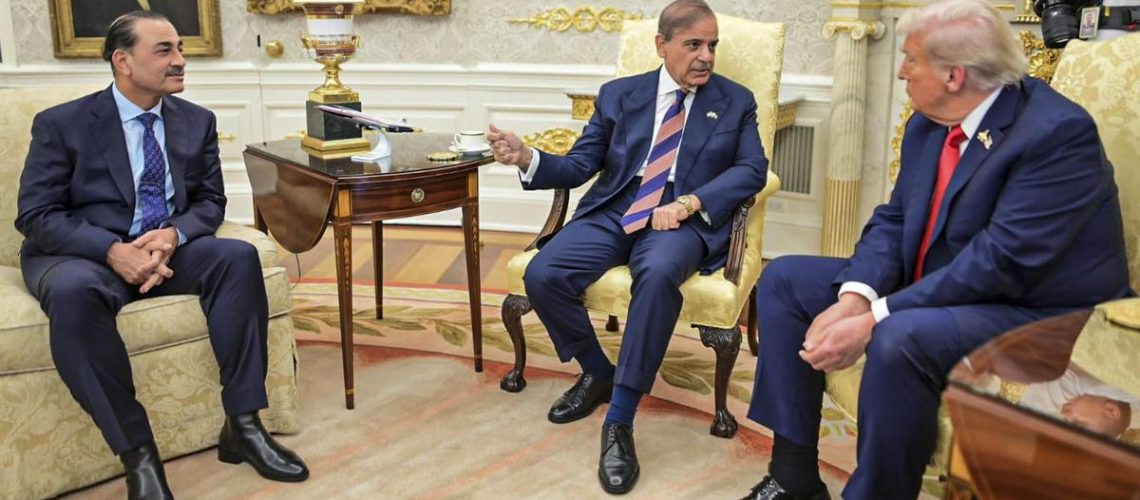
After years of relative marginalization in global affairs, Pakistan was able to reclaim a prominent position on the world stage
Update| Dec 25-2025
In many ways, 2025 turned out to be a turning point for Pakistan. The country suddenly found itself mattering again in international affairs, even as persistent problems of political and economic instability at home persisted.
Four major developments defined this complex picture for Pakistan, highlighting both the opportunities and obstacles the country faced during the year.
First, after years of relative marginalization in global affairs, Pakistan was able to reclaim a prominent position on the world stage. This shift was sparked by the intense four-day military clashes with India in May, which showcased Pakistan’s military capabilities, especially in air operations, reportedly resulting in the downing of several Indian jets. For militaries across the world, this demonstrated that Pakistan’s armed forces had not only kept pace with India’s military modernization but, to an extent, effectively countered New Delhi’s advancements despite economic challenges at home. Despite grappling with internal terrorism, economic pressures, and political divisions, this performance significantly restored Pakistan’s strategic credibility internationally.
After clashes with India, Pakistan’s relations with the United States warmed meaningfully even as India’s ties with Washington faced strains. In the Middle East, Pakistan formalized a major mutual defense pact with Saudi Arabia and concluded a $4 billion arms deal with Libya. The country is also in talks with other regional countries for similar pacts and defense sales. Its counterterrorism efforts also yielded notable successes, including close collaboration with Turkiye in operations against Islamic State militants.
China, on its part, welcomed the real-world validation of its defense systems used by Pakistan during the war with India, which to some extent also facilitated the rollout of the second phase of the China-Pakistan Economic Corridor (CPEC). Additionally, Pakistan’s involvement emerged as vital in international efforts towards Gaza’s stabilization, including potential contributions to a multinational force. Together, these gains have positioned Pakistan to play a more influential role globally heading into 2026, highlighting a level of momentum not seen in years.
Second, Pakistan adopted a tougher stance toward Afghanistan as it moved away from past accommodation of the Afghan Taliban to apply sustained pressure aimed at dismantling the Tehreek-e-Taliban Pakistan (TTP) and compel Kabul to sever ties with the group. In this regard, direct military actions, including strikes on Afghan soil, challenged long-held assumptions about cultural and regional interdependencies that could limit tough measures from Islamabad. Pakistan’s willingness to use hard power, as well as shutting down trade have come as a shock to the Taliban regime and significantly increased pressure on its crippling economy.
Moreover, Pakistan also brought its Afghanistan-related concerns to international platforms. It drew Qatar, Turkiye, and Saudi Arabia into mediatory roles to effectively highlight cross-border threats. As a result, the Taliban regime faced growing isolation and found it difficult to present their claims that they are not supporting the TTP and other militant groups credibly globally. Notably, over 1,000 Afghan clerics issued a decree prohibiting attacks on neighboring countries from Afghan territory. This was clearly a step influenced by mounting pressure from Pakistan and other regional powers. Pakistan, meanwhile, intensified its domestic counter-terrorism efforts and achieved notable successes against the TTP. This approach by Pakistan underscores a clear signal to the Afghan Taliban that its continued support for the TTP risks severe diplomatic costs and potential long-term instability for the regime in the coming months.
Third, on the economic front, Pakistan faced ongoing difficulties, with foreign direct investment declining despite diplomatic progress abroad. Persistent issues like elevated energy costs, high tariffs, and a challenging tax environment continued to hamper industry and exports. For instance, international pledges of economic support often failed to translate into action. All of this has directly contributed to rising poverty levels in the country.
Amid this gloomy economic situation, a notable bright spot came with the successful privatization of Pakistan International Airlines (PIA). A chronically loss-making government-run enterprise, PIA has drained public resources for decades. The government in Pakistan deserves praise for completing this landmark transaction, which is the first such major privatization of a state-owned enterprise in around 20 years. This deal could mark a turning point in Pakistan by encouraging greater private sector activity and providing momentum to the economy.
Fourth, political tensions persisted at home, which were largely driven by the Pakistan Tehreek-e-Insaf (PTI)’s ongoing opposition to the military and federal authorities. The party’s provincial government in Khyber Pakhtunkhwa resisted cooperation on key national issues, including counterterrorism and refugee policies. Moreover, PTI founder Imran Khan’s repeated calls for protests from prison only intensified the standoff and have raised questions about workable political stability in the country.
On a positive note, strong measures against the extremist Tehreek-e-Labbaik Pakistan (TLP) demonstrated the state’s growing intolerance for violent radicalism. This was further bolstered by the army chief’s message to religious leaders in the country that only the state holds authority over declarations of jihad.
That said, broader strains on the social contract between people and the state, fueled by population growth, inflation, income inequality, and constraints on freedoms, continued to pose a challenge to national cohesion in 2025.
Globally, too, 2025 was challenging as international norms, laws, and institutions strained under renewed emphasis on hard power and military assertiveness. Moreover, ongoing wars in Ukraine and the Middle East persisted while terrorist groups exploited vulnerabilities across Africa and Asia. Geopolitical unpredictability grew in 2025. This was largely due to policy shifts from the U.S., particularly the rampant use of coercive tariffs to pressure countries around the world. The U.S. also continued to support Israel’s actions in Gaza despite the international community calling for accountability.
This trend toward muscular and militarized approaches risks further escalation in 2026. This will likely diminish opportunities for dialogue amid competing resource demands, technological competitions, and climate pressures.
In this turbulent era, Pakistan must seek ways to attain political stability at home and foster its economic resilience with meaningful reforms to win investors’ confidence. The country has the opportunity to achieve this by taking advantage of the international mood favoring Pakistan to push domestic reforms.
The growing unpredictability of international relations could rapidly erode Pakistan’s hard-won gains in 2025. To safeguard gains made across economic, political, and diplomatic fronts, the country must urgently restore internal political unity while pursuing pragmatic and consistent diplomacy abroad.
Source: The Diplomat